IoT, AI, the Future of Work—if it’s revolutionizing industries, Peggy’s talking about it. Each week on The Peggy Smedley Show, she delivers cutting-edge perspectives from top experts, keeping 150,000+ listeners ahead of the curve.
Peggy Smedley talks about the state of the construction infrastructure market, sharing numbers and research from one new report. She says the companies that will win in the next decade will be the most adaptable.
She also discusses:
· What markets are thriving and what markets are stalling.
· How we can build the cities and infrastructure of tomorrow.
· Five steps organizations will need to take in the year ahead.


The Resilient Supply Chain Podcast is where global leaders explore how to make supply chains stronger, smarter, and more sustainable.
Hosted by Tom Raftery, technology evangelist, sustainability thought-leader, and former SAP Global VP, the show features C-suite executives, founders, and innovators from some of the world’s most influential companies. Together, we examine how organisations are building supply chains that can withstand shocks, adapt to change, and compete in a decarbonising economy.
New episodes drop every Monday at 7 a.m. CET, packed with real insight, not PR fluff.
From resilience and risk mitigation to AI-driven visibility, circular design, and ESG transformation, the podcast unpacks the data, systems, and strategies shaping global operations.
You’ll hear from the people doing the work on:
- business continuity and crisis response
- Scope 3 emissions and supply chain sustainability
- digital twins and predictive resilience
- ethical sourcing and due diligence compliance
- nearshoring, automation, and future-ready logistics
Because a supply chain can’t be sustainable unless it’s resilient, and it can’t be resilient unless it’s sustainable.
Resilient Supply Chain+ subscribers also get access to bonus episodes, including highlight reels, extra analysis, trend briefings, and other subscriber-only insights.
If you’re a supply chain executive, sustainability strategist, or technology leader, this show gives you an edge.
Subscribe now and join the global conversation redefining how the world moves, makes, and measures everything.
What happens when last-mile delivery stops being a logistics function and starts becoming a strategic differentiator?
It changes how you think about cost, resilience, sustainability, and even customer retention.
In this week's episode of the Resilient Supply Chain Podcast, I’m joined by Nishith Rastogi, Founder and CEO of Locus, to explore why last mile has become one of the most consequential decision layers in modern supply chains. For leaders focused on supply chain resilience, sustainability, risk, data, and visibility, this matters because delivery is no longer just about moving goods. It’s about making better decisions, faster, in environments where complexity keeps rising and customer tolerance keeps falling.
We break down why traditional TMS and routing models struggle when delivery networks span stores, warehouses, captive fleets, 3PLs, gig capacity, and rising service expectations. You’ll hear why “more data” is not the answer on its own, and why the real advantage now comes from turning that data into real-time decisions that improve cost, service, and emissions in parallel.
We also get into the growing role of AI in logistics, the limits of rules-based automation, and why resilience increasingly depends on optionality, adaptability, and reducing dependence on tribal knowledge.
One of the sharpest ideas in the episode is this: if you miss a linehaul slot, you lose a day; if you miss a customer delivery slot, you may lose the customer.
🎙️ Listen now to hear how last-mile logistics is reshaping the future of resilient, sustainable supply chains.
Podcast supporters
I'd like to sincerely thank this podcast's generous Subscribers:
And remember you too can become a Resilient Supply Chain+ subscriber – it is really easy and hugely important as it will enable me to continue to create more excellent episodes like this one and give you access to the full back catalog of over 460 episodes.
Podcast Sponsorship Opportunities:
If you/your organisation is interested in sponsoring this podcast – I have several options available. Let's talk!
Finally
If you have any comments/suggestions or questions for the podcast – feel free to just send me a direct message on LinkedIn, or send me a text message using this link.
If you liked this show, please don't forget to rate and/or review it. It makes a big difference to help new people discover it.
Thanks for listening.


The shipping industry is the backbone of international trade, contributing to the globalisation and development of the world, but it’s the shipping people who makes the world go around.
This is where you meet the maritime professionals, strong characters with an interesting background.
Plugged In: How Shore Power Is Cleaning Up Our Ports
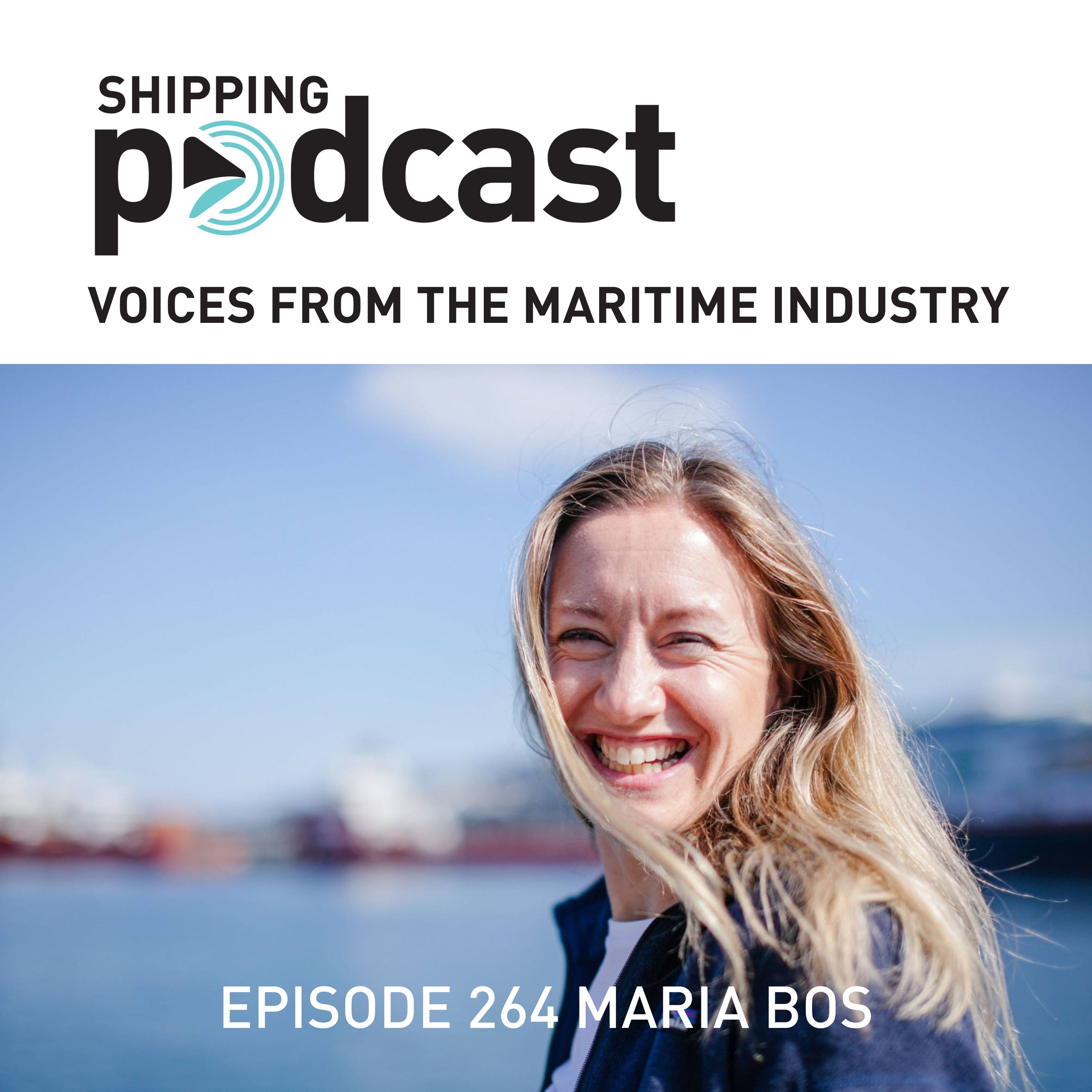
In this episode, we dig into shore power—the system that lets docked ships plug into port power rather than burning fuel on board. This simple switch reduces fuel use, drastically cuts air pollution, and helps port cities enforce anti-idling laws.
Listen to Maria Bos, CEO of Plug, a professional operator focusing on stable, easy-to-use shore power installations. Maria has extensive experience in innovation, digitalisation, and strategy across the financial and renewable energy sectors. Plug is an Eviny-owned shore power company.
Thank you for listening. Don’t forget to spread the word about the Shipping Podcast. #everyconversationmatters

Climate Confident is the podcast for business leaders, policy-makers, and climate tech professionals who want real, practical strategies for cutting emissions and building a resilient low-carbon future.
Every Wednesday at 7am CET, I sit down with the people doing the work, executives, engineers, scientists, founders, and policymakers, to unpack what’s actually driving climate progress across energy, transport, industry, supply chains, food, finance, and more.
This isn’t about vague pledges or greenwash. It’s about what’s working, what isn’t, and what leaders need to understand now to make better decisions faster.
Expect conversations on:
Subscribers also get Bonus episodes, including highlight reels, analysis, emerging themes I’m seeing across conversations, and other subscriber-only extras.
You can still listen to the most recent episodes for free, and if you want to go deeper, subscription gives you more Climate Confident in your feed.
Want to shape the conversation? Drop me a line anytime at Tom@tomraftery.com
, whether it’s feedback, a guest suggestion, or just a hello.
Ready to stop doomscrolling and start climate-doing? Hit follow and let’s get to work.
What if one of the biggest climate problems in our buildings isn’t power generation, but the fact we’re still burning fuel in the basement?
In this episode, I’m joined by Dan Yates, CEO of Dandelion Energy, to unpack why geothermal may be one of the most overlooked tools in climate tech today, and why building decarbonisation deserves far more attention in the wider energy transition debate. If we’re serious about net zero and real emissions reduction, we need to stop treating heating as a side issue.
Dan lays out a blunt truth: heating and cooling account for the vast majority of emissions from buildings, yet much of the conversation still fixates on EVs, solar, and batteries. You’ll hear why some forms of electrification can create a nasty unintended consequence by driving winter peak demand through the roof, and why geothermal flips that logic on its head. We dig into how ground-source systems can cut energy use, slash peak load, and potentially reduce the need for expensive new grid infrastructure.
You might be shocked to learn that this isn’t just an HVAC story. It’s a grid story. A policy story. A housing story. We also get into cost, leasing, incentives, data, and why Dan believes geothermal should be seen as distributed infrastructure hiding in plain sight. If you want a clearer view of what practical climate action looks like beyond the usual talking points, this one’s worth your time.
🎙️ Listen now to hear how Dan Yates and Dandelion Energy are pushing a smarter, more strategic path to decarbonisation.
Podcast subscribers
I'd like to sincerely thank this podcast's amazing subscribers:
And remember you too can Subscribe to the Podcast – it is really easy and hugely important as it will enable me to continue to create more excellent Climate Confident episodes like this one, as well as give you access to the entire back catalog of Climate Confident episodes.
Contact
If you have any comments/suggestions or questions for the podcast – get in touch via direct message on LinkedIn.
If you liked this show, please don't forget to rate and/or review it. It makes a big difference to help new people discover the show.


ClearTech Loop is a fast, focused podcast delivering sharp, soundbite-ready insights on what’s next in cybersecurity, cloud, and AI. Hosted by Jo Peterson, Chief Analyst at ClearTech Research, each 10-minute episode explores today’s most pressing tech and risk issues through a business-focused lens.
Whether it’s CISOs rethinking cyber strategy or AI reshaping risk governance, ClearTech Loop brings clarity to a shifting landscape—built for tech leaders who don’t have time for fluff.
We cut through hype. We rethink assumptions. We keep you in the loop.
In this episode of the ClearTech Loop podcast, Jo Peterson sits down with Gerry Gadoury to talk about what AI security leadership actually requires as the threat landscape changes faster and the business pressure around AI keeps rising.
This is not a conversation about one more security tool. Gerry brings the discussion back to risk judgment, executive alignment, and the human side of security leadership. As AI lowers the barrier for attackers and accelerates the pace of change, security leaders need to focus on real risk, not theoretical panic, while helping the business make better decisions under pressure.
Subscribe to ClearTech Loop on LinkedIn: https://www.linkedin.com/newsletters/7346174860760416256/
Key Quotes
Three Big Ideas from This Episode
Additional resources
🎧 Listen: In Buzzsprout Player
▶ Watch on YouTube:https://www.youtube.com/@ClearTechResearch/playlist
📰 Subscribe to the Newsletter:
https://www.linkedin.com/newsletters/7346174860760416256/